

UK & Ireland delivery or store pickup: 1–2 weeks
Your quote list is empty
Unfortunately there are no strict definitions of the term 'Clean Burn' when it is applied to multi fuel stoves and wood burners. No doubt you'll come across 'clean burn' or 'cleaner burning' elsewhere on the internet and it is worth pointing out that it is sometimes deliberately used to mislead customers regarding the benefits and features of inferior quality, usually imported, lower priced stoves.
In November 2019, following a complaint about the use of the term 'clean burn' in relation to stoves, the Advertising Standards Authority (ASA) ruled that providing 'clean burn' was not used as an absolute term and its use was explained in a product's supporting promotional literature, advertising and website it could continue to be used.
At The Stove Yard we would regard any 2022 Ecodesign compliant stove which has passed both the strict Ecodesign and Defra Approved emissions tests as worthy of being called 'clean burning' because the stove's combustion system has been designed and set up differently to reduce the amount of smoke and emissions it produces, since smoke is essentially 'dirty' unburned particulates. When a non-Defra stove is in slumber mode it is in fact burning inefficiently – of course, it will still produce a certain level of heat and also dramatically slow down the fuel consumption, but it will also produce much more smoke than is acceptable under the Clean Air Act. A Defra Smoke Exempt Appliance limits the ability to 'slumber' the stove so that it will always burn cleanly, provided it is operated in the correct way and unseasoned or 'wet' wood is never burned.
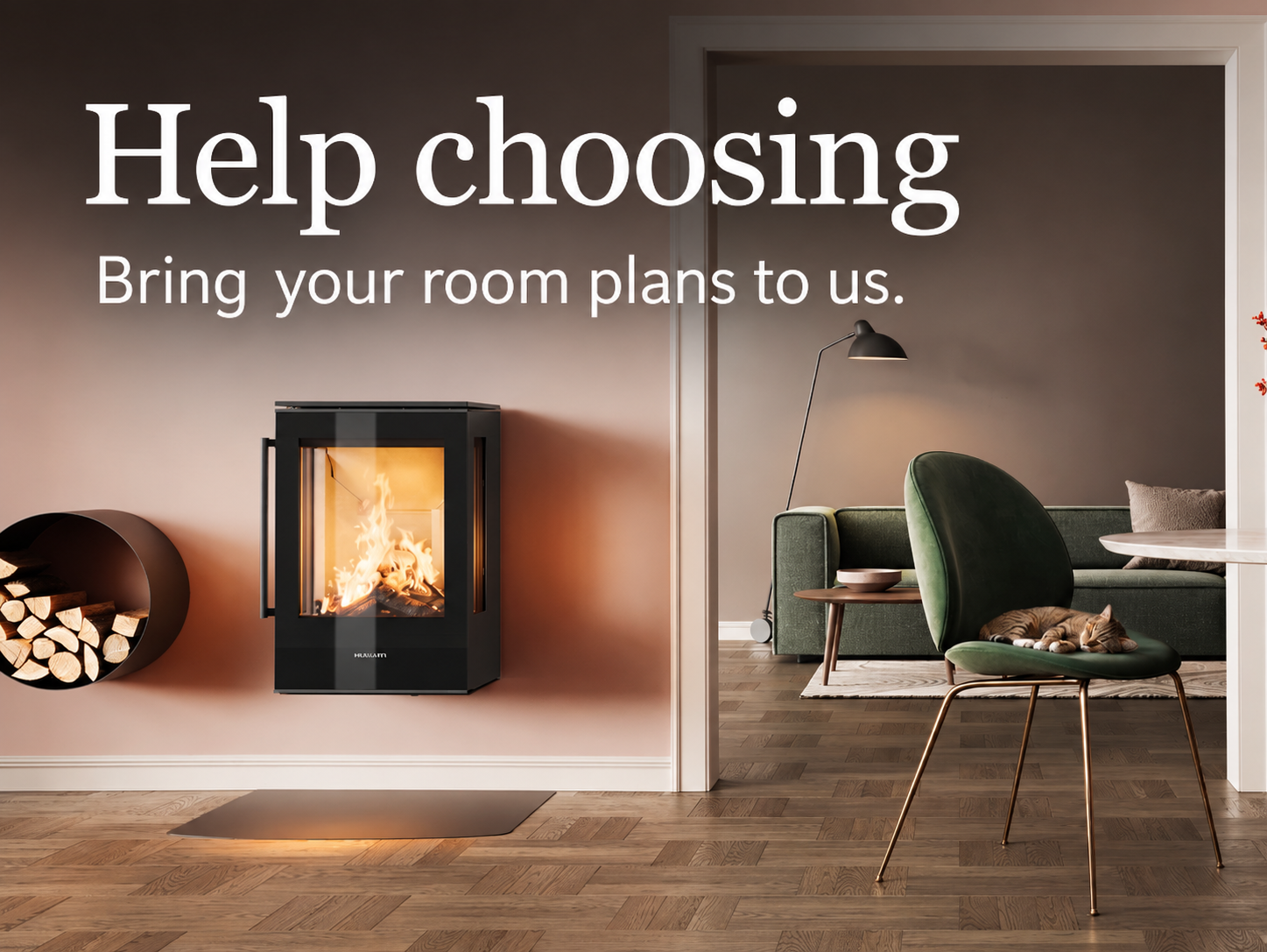
Today, for us any 2022 Ecodesign compliant stove which has an efficient pre-heated tertiary air system and an above-average efficiency, has the credentials to be rightly described as a clean burn stove – even though many manufacturer's themselves have never necessarily liked using the term – Danish stove maker HWAM, probably being the best example.
Pre-heated tertiary air, which is not usually part of the combustion system in many older stoves, is an additional level of air introduced above the fuel load that helps burn off any of the remaining particulates, which would otherwise have escaped into the flue system without combusting, thus making the stove truly clean burning. This accounts for the top-end efficiencies of stoves which feature pre-heated tertiary air system and which is becoming a more common feature, even on modestly priced stoves like the best-selling Ecodesign compliant and DEFRA approved Hi-Flame Graphite 5.
Sign up to get the latest on sales, new releases and more …